Know your system · Heating
Furnace won't ignite: safe checks before you call
Short version: if the furnace clicks but never fires, start with four visible checks - the thermostat setting, the power switch and breaker, the filter, and the gas valve position. Everything past those, from the igniter to the flame sensor to the burners, is a pro job. If you smell gas, skip all of this: get everyone out and call your gas utility or 911 from outside. Do not operate switches, open windows, or go back in.
Read the field notes
- 1. Thermostat set to "HEAT", above the room temperature.
- 2. Power switch and breaker. The page covers how to treat a tripped breaker.
- 3. Filter: turn the system off first. Replace it if it is loaded.
- 4. Gas valve: do not open a valve you found closed.
- Still no flame? Call a pro. If you smell gas, leave and call from outside.
Check 1: the thermostat
Make sure it is set to "HEAT" and the set temperature is above the current room temperature. Someone in the house may have changed it.
Use Play or Next frame to follow the sketch.
Still sketch. Enable JavaScript for playback controls.
- Thermostats vary. Some use a touchscreen or a separate mode switch. The 68 degree room is an example.
- The furnace only starts when the set temperature is above the room temperature.
Check 2: power
A gas furnace still needs electricity for the blower, the igniter and the control board. You can confirm it has power without opening anything or testing with a meter.
Use Play or Next frame to follow the sketch.
Still sketch. Enable JavaScript for playback controls.
- The small window in the lower furnace door is a sight glass. A lit or blinking control board light behind it means the furnace has power. A blinking pattern can point to a problem; some boards show a code instead, and on most boards error codes start with an "E". Look through the window only. Do not take the doors off.
- No light at all: check the furnace switch, then the breaker. A tripped breaker usually sits out of line with the others, its handle stopped between ON and OFF. Some brands also show a colored flag. Do not reset any breaker more than once. If it trips again, leave it off and call a pro.
- If the panel is wet, damaged, overheating, buzzing, sparking or smells burnt, stay away and call a pro.
- The furnace switch. It usually looks like an ordinary light switch, either on the wall beside the furnace or mounted on the furnace itself. Make sure it is "ON".
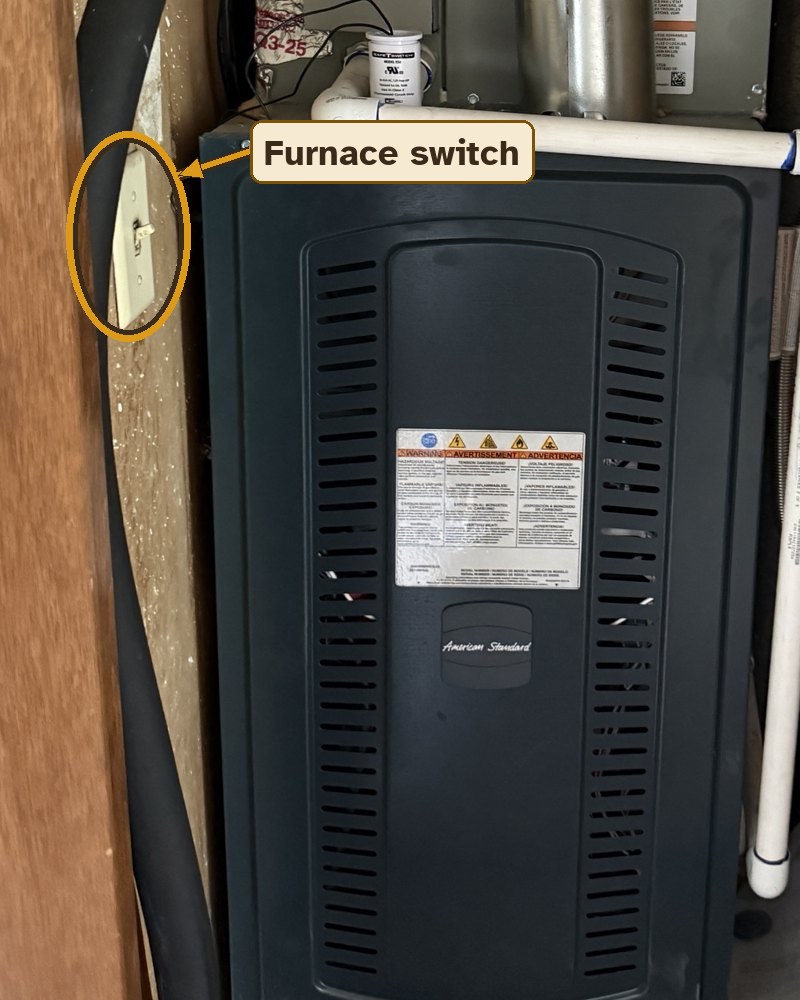
A furnace switch on the wall to the left of the furnace. 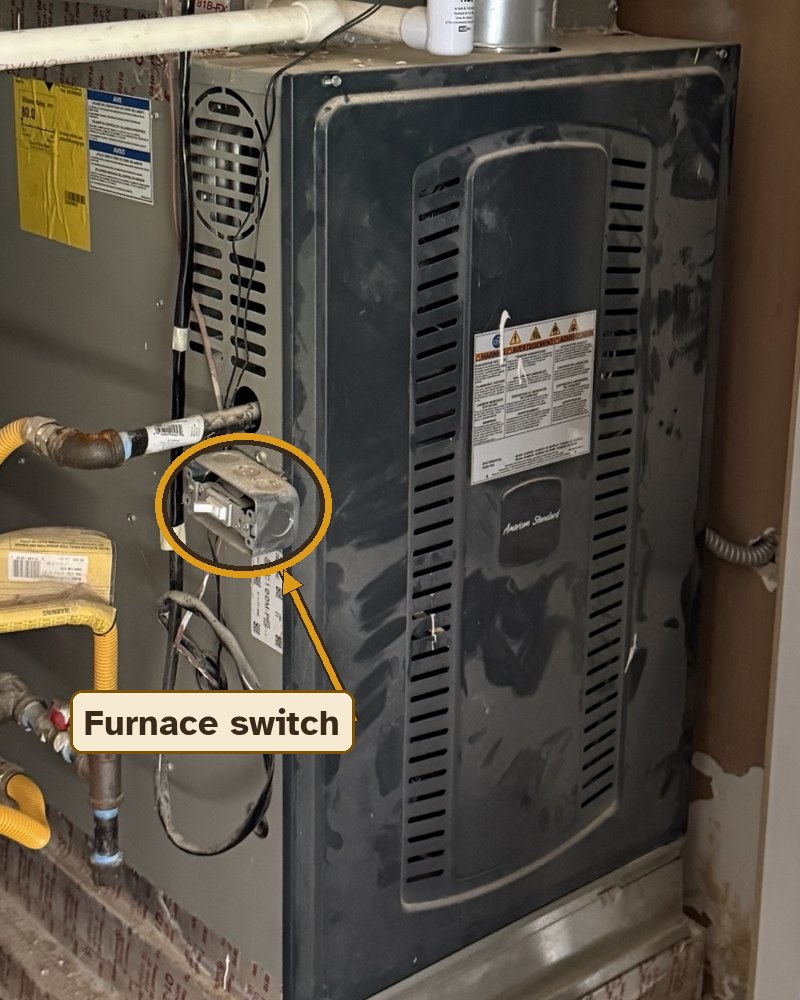
A furnace switch mounted on the side of the furnace, in a small metal box. - The control board light. Many furnaces have a small window in the lower door, also known as a sight glass. It shows a light on the control board to indicate the power is on, and the light may blink in certain patterns to indicate something is wrong. Look through the window only. Do not take the doors off. Some boards have a small display instead of a single light. On most boards, error codes start with an "E". Other codes show a setting: "tP1", for example, means the blower is on tap speed 1, its lowest speed for circulating air.
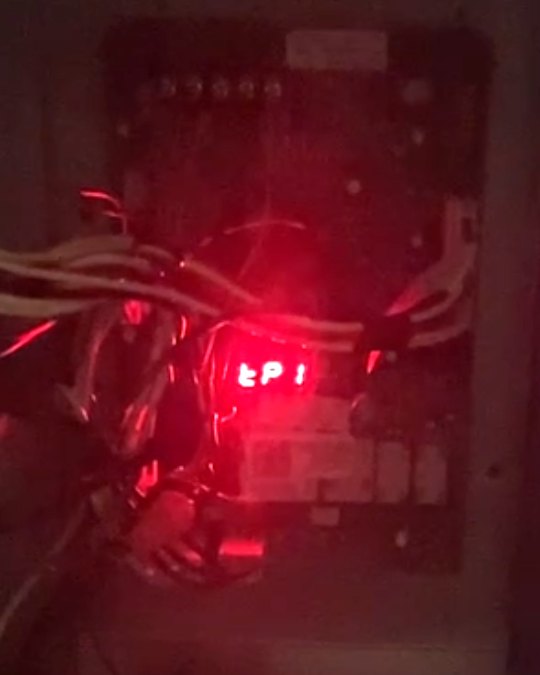
A control board display reading "tP1": the board has power and the blower is on its lowest speed. A technician took this with the furnace door off. At home, look through the door window only. - The breaker panel. Look for a tripped breaker labeled for the furnace. Do not reset any breaker more than once. If it trips again, leave it off and call a pro. A breaker that trips again needs to be checked out for your safety.
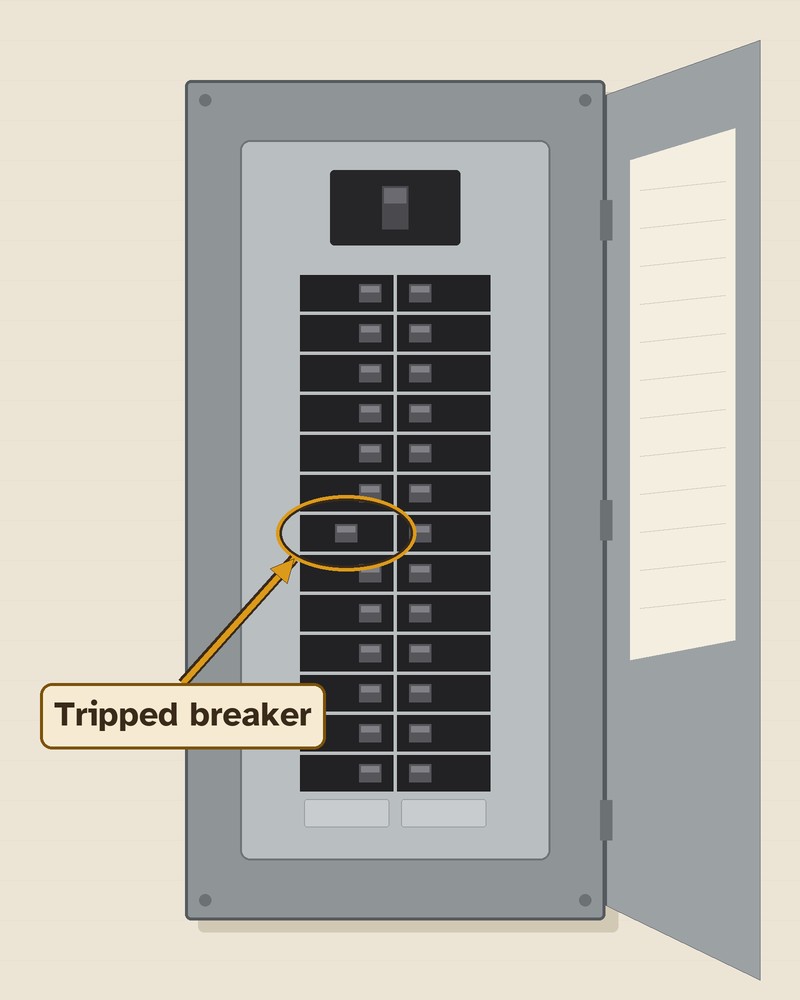
Drawing of a home breaker panel with the door open and the cover on. A tripped breaker usually sits out of line with the others.
If the panel is wet, damaged, overheating, buzzing, sparking or smells burnt, stay away and call a pro. If you cannot tell which breaker is the furnace's, do not guess or reset it. Do not test anything with a meter. If you are not comfortable making these checks, call a pro instead.
Check 3: the filter
A badly clogged filter can restrict airflow. Trane names a dirty filter as one possible cause of ignition trouble, not a diagnosis from this symptom alone. The filter is usually in one of two places: in a slot at the furnace, or behind a return air filter grille on a wall or ceiling. Before changing an accessible filter, turn the system off at the thermostat and make sure the fan is set to AUTO, not ON. Do not use the furnace switch or the breaker for this. To check it, do a light test: hold the filter up to a light beside a new one. If light passes through easily, air can too. If the light looks dim, or does not come through at all, replace it. Color alone does not decide its condition. Use the correct size and an equipment-compatible type. The size printed on the old filter can be wrong. To find the correct size, measure the space the filter fits into, look for a label at the furnace or grille, or ask a pro. Do not reach inside the furnace. How long a filter lasts is different in every home. Check it each month to learn how fast yours gets dirty; if nothing else, changing it every 3 months is a good rule of thumb. FilterPing prepares reminders you can add to your own calendar.
Use Play or Next frame to follow the sketch.
Still sketch. Enable JavaScript for playback controls.
Read the field notes
- Turn the system off at the thermostat and make sure the fan is set to AUTO, not ON. Do not use the furnace switch or the breaker for this. Do not reach inside the furnace.
- The filter is usually in a slot at the furnace or behind a return air filter grille on a wall or ceiling.
- Light test: hold the filter up to a light beside a new one. If light passes through easily, air can too. If it looks dim, or no light comes through, replace it. Color alone does not decide its condition.
- Every home is different. Check monthly to learn how fast yours gets dirty; every 3 months is a good rule of thumb. The size printed on the old filter can be wrong. To find the correct size, measure the space the filter fits into, look for a label at the furnace or grille, or ask a pro.
Check 4: the gas valve
The furnace's gas shutoff is usually a lever or knob on the pipe a few feet from the unit, and a lever-type handle in line with the pipe usually indicates an open valve. Do not open a closed gas valve unless you know why it was closed. Contact a professional for assistance if you are not sure.
Use Play or Next frame to follow the sketch.
Still sketch. Enable JavaScript for playback controls.
- The furnace gas shutoff is usually a quarter-turn valve on the gas pipe a few feet from the furnace, often with a yellow lever. Some have a T-shaped handle or a flat tab instead.
- A handle in line with the pipe usually means open. Across the pipe usually means closed. Below the valve you may see a union and a short capped pipe called a sediment trap. Leave those alone.
- Do not open a closed gas valve unless you know why it was closed. Contact a professional for assistance if you are not sure. If you smell gas, get everyone out and call from outside.
If it still will not light: more to consider
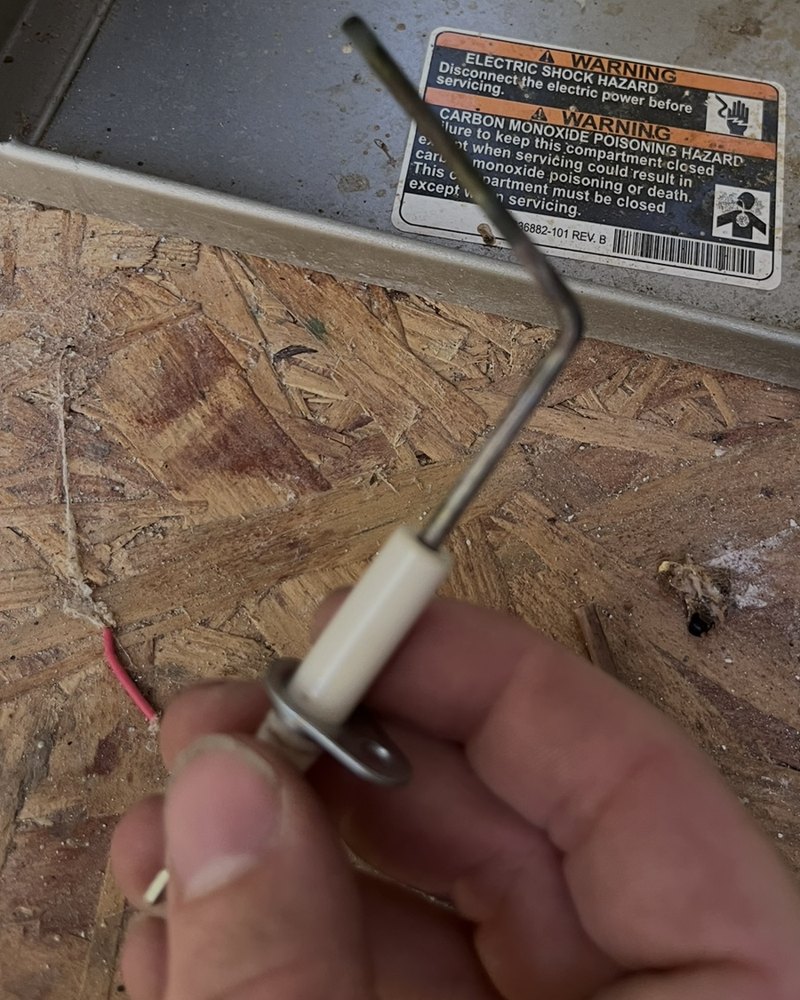
Many furnaces today light with a hot surface igniter, and some, usually package units, use a spark igniter. Older furnaces often have a standing pilot instead. Trane says the ones it made since 2010 use an igniter, but the changeover date varies by maker, so check the label or manual. When an igniter furnace will not fire, the usual suspects are a failed igniter, a dirty flame sensor (a safety part that shuts the gas off if it cannot see a flame), or dirty burners. All three are common, fixable - and all three mean opening the furnace, which is pro territory. Trane is blunt about it: DIY burner work can even void a warranty. If yours is still under warranty, check the end date before anyone opens it up. An older furnace with a standing pilot has its own relighting steps, printed on the unit. Follow them exactly. If you are in doubt at any step, stop and call a pro. If the pilot goes out again after you relight it, leave it off, call a pro, and make sure your CO alarms work.
When to call
Call a qualified professional if the breaker trips again after one reset or if the furnace still will not light after the visible checks above. Stop before attempting a reset if the panel shows any of the warning signs listed above or you cannot clearly identify the correct breaker. If anything about the gas side is uncertain, stop and call a professional. A professional fall check can find problems before the first cold night. If something does not seem right, or you are not comfortable with a check, trust your instincts and call a pro.
Sources
The component explanations, filter link to ignition failure, the note that furnaces Trane made since 2010 use an igniter instead of a standing pilot, and the warranty warning on DIY burner work follow Trane's furnace-not-igniting troubleshooting page. Trane's page recommends calling a pro instead of resetting a tripped furnace breaker at all.
The filter point is also supported by a neutral source. ENERGY STAR says a dirty filter slows airflow and makes the system work harder, and suggests checking the filter every month in heavy-use months and changing it at least every 3 months. The igniter, flame sensor and burner explanations come from Trane alone.
Trane page checked October 9, 2026. ENERGY STAR page checked October 1, 2026.